

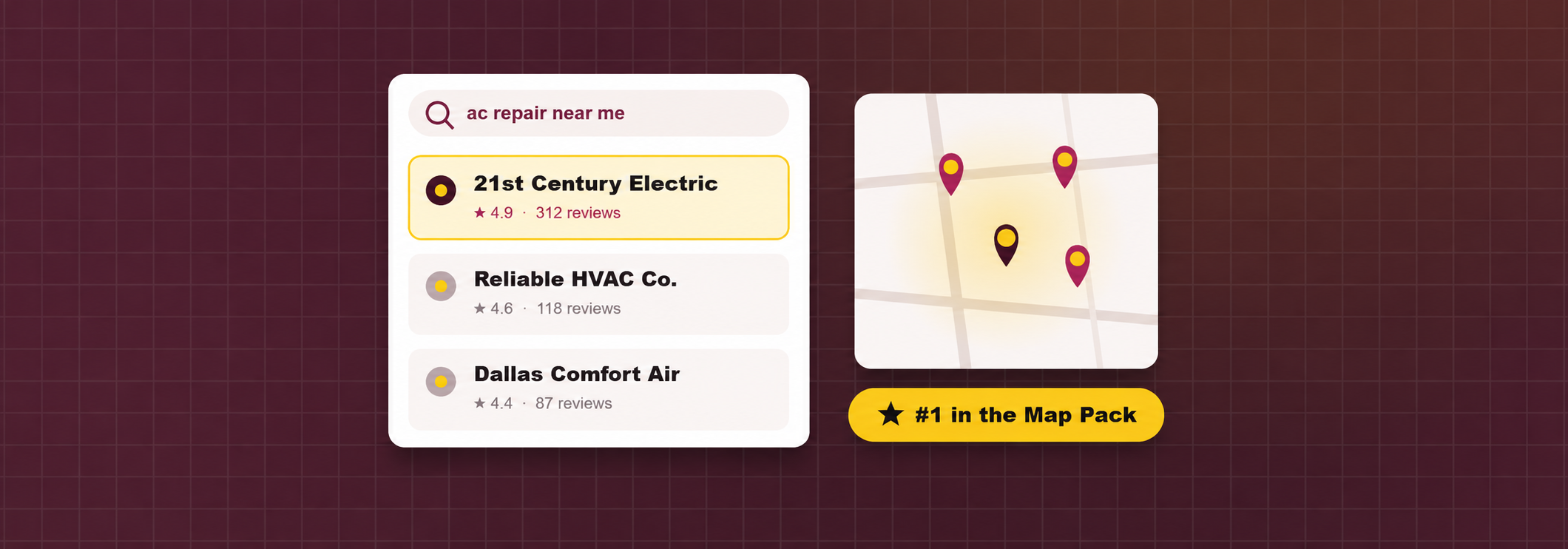
If your HVAC company depends on paid advertising every time you need the phone to ring, you are paying for nearly every new opportunity. Advertising can capture immediate demand, but it should not be the only way homeowners find your business.
HVAC SEO gives you another path. It helps your company appear when homeowners search for AC repair, furnace service, HVAC installation, heat pump replacement, maintenance, and other services in the areas you actually serve. These are not casual searches. Someone looking for an HVAC contractor is usually trying to solve a real problem and may be ready to call a company that looks credible, local, and available.
The goal is not simply more website traffic or a longer list of ranking keywords. It is to make your business visible for searches that can realistically turn into service calls and booked jobs.
What Is HVAC SEO?
HVAC SEO is the process of improving the visibility of a heating and cooling company across Google Search and local search results. A complete strategy typically involves your website structure, individual service pages, Google Business Profile, reviews, local relevance, useful content, technical website health, internal linking, business citations, and links from other credible websites.
These elements work together to help Google understand what services you provide, where you provide them, and whether your business appears credible enough to show prominently when a local customer searches.
Google explains that local results are primarily influenced by three things. Strong local rankings usually come from more than putting a city name into a page title — your website, services, reviews, business information, content, and overall authority all need to support the same clear message about what you do and where you do it.
Start With the Services That Actually Generate Revenue
Keyword research should begin with your business priorities, not a list exported from an SEO platform. One contractor may want more emergency AC repair calls for steady volume. Another may prioritize complete system replacements for the higher project value. A company expanding into heat pumps may want visibility around installation searches. Those commercial priorities should determine which keywords and pages matter most.
The intent behind the search matters as much as the volume — and treating both stages the same is where campaigns go wrong.
Still Researching
Informational intent. Real value, but the homeowner is diagnosing a problem, not yet hiring a contractor. Best served by content that answers first.
Ready to Hire
High commercial intent. Fewer visitors, but far closer to a booked job. This is what a dedicated service page should win.
This is why chasing traffic alone can steer a campaign wrong. A few hundred visitors from outside your service area are worth far less than a smaller number of local homeowners searching for a service you provide.
Build Dedicated Pages for Important Services
The most common SEO weakness on HVAC websites is trying to make one general "Heating and Cooling Services" page rank for everything. It tells visitors what you do, but gives search engines very little depth on any individual service.
A stronger structure gives commercially important services their own pages. An AC repair page can explain the problems you fix, the signs service is needed, areas served, availability, and how to schedule. A furnace repair page addresses an entirely different set of questions. This improves relevance for Google, but it matters just as much for the homeowner — someone searching specifically for AC repair should not have to dig to learn whether you can solve the problem.
If your website gets traffic but not enough inquiries, the issue may not be SEO alone. The design, messaging, trust signals, and conversion path all decide whether a visitor becomes a lead — which is where strong website design for local service businesses earns its keep.
Google Business Profile
One of the most important components of local visibility. It helps you appear in Google Maps and when a search has strong local intent. The first priority is accuracy — name, category, phone, website, hours, services, and service areas should correctly represent the business.
Your profile should support what customers see on your website. If AC repair is a core service, that should be clear across both. This is not an invitation to stuff every field with keywords — it is about giving Google and customers clear information.
Reviews
SEO gets you into the conversation. Reviews decide whether you win it. When a homeowner sees several capable businesses, the number and quality of reviews, how recent they are, and how you respond become deciding factors.
Reviews also contribute to local prominence. Make review generation part of the customer process, not an afterthought, and respond professionally to every one. That trust extends well beyond SEO .
Create Location Pages Only When They're Useful
Serving several cities from one location makes location-based SEO attractive — and it is where contractors create problems by publishing dozens of near-identical pages. Swapping one city name for another does not create useful local content. A good location page gives a customer in that market information that genuinely helps them evaluate you: services available there, examples of completed work, relevant reviews, communities served, and answers to local questions. The page needs a reason to exist beyond ranking for another city keyword.
For a large metro, it is usually better to build stronger pages around strategically important markets than to spin up one for every suburb within driving distance.
Use Blog Content to Support Service Pages
Blog content becomes far more valuable when it is connected to services that generate revenue. A company chasing AC repair calls might answer why an AC runs but does not cool, what causes a system to freeze, or when repair beats replacement. Answer the question properly first, then, when professional service becomes relevant, point the visitor to the AC repair page. Informational articles support commercial pages instead of competing with them — the same approach behind our HVAC lead generation resource.
Internal Linking Ties It Together
An article on why an AC is not cooling should connect to the AC repair page. Your most important pages should receive links from relevant supporting content rather than sitting several clicks from every article. Anchor text should describe the destination — "AC repair services" gives more context than "click here" — and every link should feel natural to read, not inserted to satisfy a checklist.
Traffic Has to Convert Into Calls
An SEO report can show rising rankings, impressions, keywords, and organic traffic while the owner still feels nothing has changed. That happens when SEO performance is measured separately from business performance. Visibility metrics show whether your search presence is improving — but they should eventually connect to phone calls, form submissions, qualified leads, booked appointments, and revenue.
An informational article may drive traffic without many service calls. A service page ranking for a local AC repair search may get less traffic but far stronger intent. Both matter — but they should not be judged by the same metric. The closer you connect organic search to booked work, the easier it is to see which services, locations, and content deserve more investment.
Paid Ads
Captures demand quickly. Best for immediate call volume, seasonal pushes, or entering a market while organic rankings are still developing. Rely on it alone and you are tied to ad costs and campaign performance.
SEO
Takes longer to build, but expands your footprint across service searches, local results, Maps, and informational topics over time. Rely on it alone and you can struggle to scale volume quickly when demand shifts.
The stronger strategy is rarely one or the other — it is understanding the role each should play. For a deeper comparison, read Local SEO vs Paid Ads for Service Businesses: What Actually Drives Jobs in 2026.
Common HVAC SEO Mistakes
Most weak campaigns are not failing because of a mysterious Google update. Important services get grouped onto one generic page. Location pages repeat the same content. Business Profile information is incomplete. Reviews are inconsistent. Articles are published without a strategy. Key pages get few internal links. Technical problems linger. Rankings improve, but the website does not make it easy for customers to call.
Another common mistake is chasing traffic with little connection to your market or services. You do not need to become the world's largest source of information about air conditioning — you need enough authority around the services and locations that produce profitable work. Publishing more content is not automatically better. Each page should have a clear purpose, a distinct intent, and a logical place in the site.
No single timeline fits every company — treat SEO as a compounding channel, not a fixed campaign. Early signals come first; the meaningful goal is when they turn into booked jobs.
Frequently Asked Questions
What is HVAC SEO? +
Is SEO worth it for HVAC companies? +
What keywords should an HVAC company target? +
Does an HVAC company need separate service pages? +
Do Google reviews help HVAC SEO? +
Should HVAC companies use SEO or Google Ads? +
Build a Search Presence That Produces Real Jobs
HVAC SEO works best when it is built around how customers actually search and choose a contractor. Start by understanding which services matter most, then give them useful pages, clear local relevance, accurate a Google Business Profile information , strong reviews, supporting content, credible authority, and a website that makes contacting you easy. When those pieces work together, organic search creates the opportunity, the website establishes trust, and your sales process turns interest into booked work.
If competitors keep appearing above you for important services, or your website gets traffic without producing calls, the first step is finding where the gap is. Yay Blitz connects search visibility, website conversion, advertising, and lead response into one growth system — measured by qualified calls and booked jobs, not rankings alone. Start with a free strategy assessment .
 Funnel Strategy
 Graphic & Web Design
 Paid Local Ad
 Marketing Strategy