

Every blinds and shutters business has busy seasons and slow ones. The difference between steady growth and a stressful year is often whether the business plans for those swings or simply reacts to them.
Many owners run the same ads, the same budget, and the same message all year, then scramble when the calendar empties or overflows.
Seasonal marketing turns predictable demand into a plan.
This guide explains how owners can read their own seasonal pattern, match messages to homeowner triggers, time campaigns around custom lead times, shift budget with demand, and use slower months to build the next peak.
Window Treatment Demand Moves With the Calendar
Most blinds and shutters businesses feel the rhythm of the year even if they have never charted it. Some months the calendar fills without effort. Others, the phone goes quiet and consultants have open afternoons.
Those swings are rarely random. They follow homeowner behavior: moving season, spring refresh projects, summer heat and glare, fall preparation before the holidays, and new year planning.
Seasonal marketing is not about running a sale every month. It is about matching the message and budget to what homeowners are already thinking about.
This article sits under the broader Window Treatment Marketing strategy. It focuses on how owners can plan the year around real demand patterns, keep the calendar steadier, and protect margin during slower periods.
Start With Your Own Seasonal Pattern
General seasonal advice is useful, but your own data is better. Climate, local housing activity, product mix, and competition all change the pattern.
Pull at least two years of CRM history if you have it. Look at monthly leads, booked consultations, sold jobs, average job value, and installation lead times. The pattern you find becomes the planning calendar for everything else in this guide. Blinds Leads explains how to connect those numbers to lead sources.
Map the Homeowner Triggers Through the Year
Each season brings different reasons to buy. Messaging should follow those reasons, not a generic promotion.
These triggers vary by region. A hot climate business may see stronger summer demand for sun control. A market with cold winters may see more interest in insulating shades. Use your own data to confirm which triggers matter locally.
Plan Campaigns Around Lead Time, Not Just the Season
Custom window treatments take time to measure, produce, and install. That changes when marketing has to start.
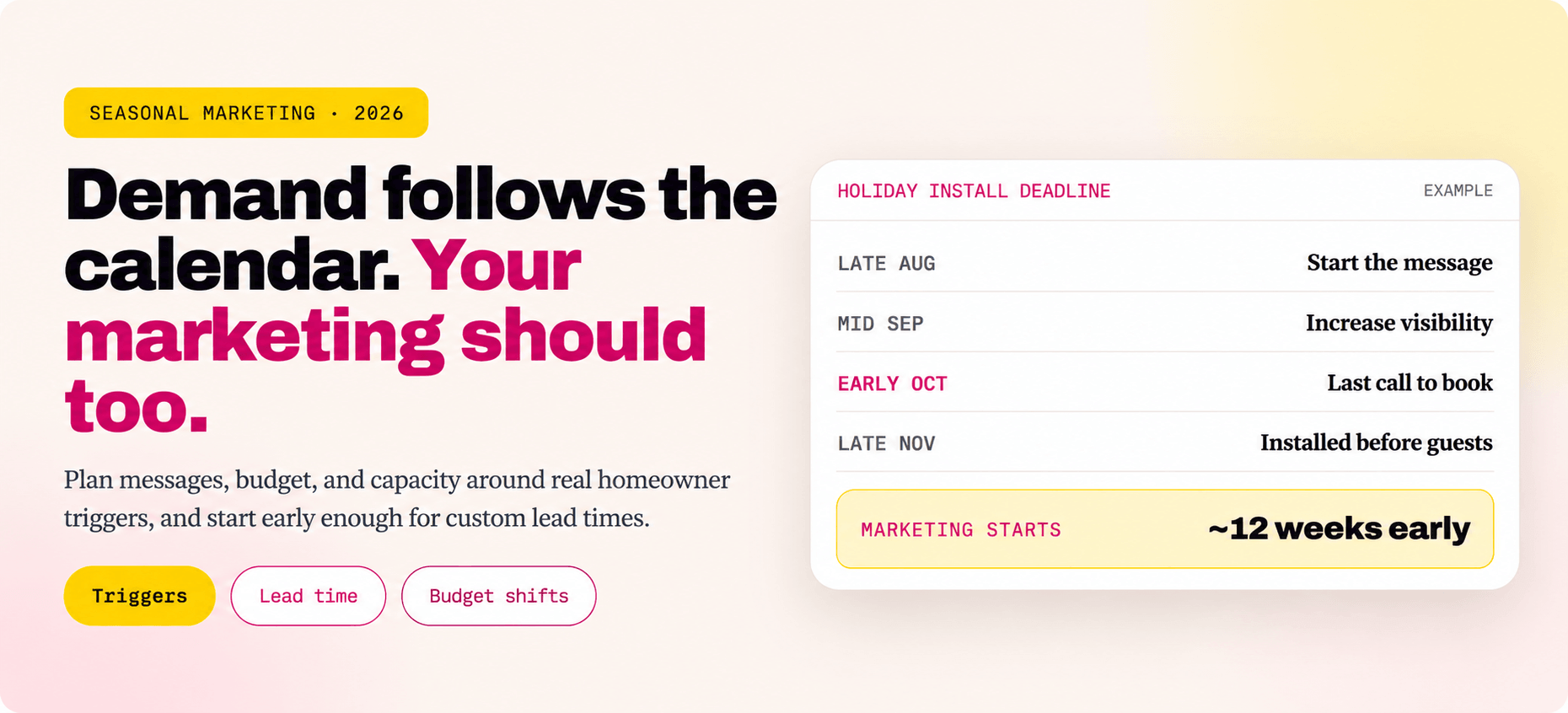
If a homeowner wants shutters installed before Thanksgiving, they need to book a consultation well before production lead times would push installation past the holiday. Marketing that starts in November is often too late for that buyer.
Adjust these windows to your actual production and installation lead times. Never promise install dates the business cannot meet.
Match the Message to the Season
The same product can be positioned differently through the year. Seasonal copy should connect the product to what the homeowner is feeling right now.
Useful copy names the problem, the product that solves it, and the next step. It works in ads, on landing pages, in email, on social, and in Google Business Profile posts.
Shift Paid Budget With Demand
Many businesses run the same paid search budget all year. That can overspend in slow months and miss opportunity in peak months.
Base changes on booked consultations and sold jobs, not only clicks. Window Treatment PPC covers campaign structure, search terms, and conversion tracking in depth.
The goal is steady booked consultations, not a spike the calendar cannot absorb.
Prepare Seasonal Landing Pages Before You Need Them
Seasonal campaigns work best when they send homeowners to a page that matches the message. A generic homepage weakens even strong ads.
Build and test these pages before the season starts. Blinds Website Design covers page structure, forms, and mobile booking.
Use Organic Content to Catch Seasonal Research
Homeowners research seasonal problems before they search for a company. Content that answers those questions early can bring them to the business first.
Publish seasonal content ahead of the season so it has time to be discovered. Window Treatment SEO explains how these guides should connect to product and local pages.
Keep Google Business Profile Seasonal and Active
Your Business Profile is often the first thing homeowners see. Seasonal updates show the business is active and relevant.
Google Business Profile Optimization covers profile structure, photos, reviews, and posts in more detail.
Use Slow Months Strategically
Slower periods are not only a problem to fix. They are also a chance to prepare for the next peak and to work with existing customers.
Window Treatment Quote Follow Up and Window Treatment Trade Partner Marketing both become more valuable when the calendar has space.
Be Careful With Seasonal Discounts
Seasonal promotions can help, but automatic discounts every season train customers to wait for the next sale and erode margin.
Before discounting, consider alternatives that create urgency without cutting price:
If promotions are used, keep them clear, honest, and consistent with applicable advertising rules. Avoid fake deadlines or inflated “original” prices.
Plan Capacity Before the Peak
Seasonal marketing only helps if the business can handle the demand it creates. Long waits for consultations or installations can undo good marketing.
AI Lead Management for Contractorscan help respond to inquiries quickly during busy periods so leads are not lost while the team is in the field.
Measure Seasonal Performance
Review each season after it ends so the next plan is based on evidence:
Keep a simple seasonal log: what you ran, when it started, what it cost, and what it produced. After one year, planning becomes much easier. After two, it becomes a reliable operating calendar.
What to Review First
Start with the last twelve to twenty four months of data:
Most owners find a clear pattern within an hour of looking. The next step is turning that pattern into a simple twelve month plan the whole team can follow.
Twenty four questions for your twelve month plan
Use this checklist against the last twelve to twenty four months of results.
Seasonal data
6 itemsMessaging and pages
6 itemsBudget and promotions
6 itemsCapacity and slow months
6 itemsIf many of those answers are no, the business may be reacting to the calendar instead of planning for it. A simple twelve month plan changes that.
Frequently Asked Questions From Blinds and Shutters Owners
When is the busiest season for window treatment businesses?+
How early should we start holiday marketing for blinds and shutters?+
Should we reduce ad spend in slow months?+
Are seasonal sales a good idea for window treatments?+
What should we do during slow months?+
How do we measure seasonal marketing?+
A Steadier Calendar Starts With a Plan
Seasonal swings are part of the window treatment business. Being surprised by them does not have to be.
The businesses that plan the year ahead spend less time scrambling and more time installing.
That means reading your own seasonal pattern, matching messages to real homeowner triggers, starting campaigns early enough for custom lead times, shifting budget with demand, preparing capacity before peaks, and using slow months to build the next busy season.
For owners, the result is a steadier consultation calendar, better use of marketing budget, and fewer months where the team is either overwhelmed or waiting for the phone to ring.
Yay Blitz helps blinds, shutters, and other local service businesses connect Paid Local Advertising , Local SEO vs Paid Ads, Graphic and Web Design , and AI Lead Management for Contractors into one measurable acquisition and conversion system.
If your calendar swings between overbooked and empty, start with a Free Strategy Assessment . We will review your seasonal pattern and build a twelve month plan around it.
 Funnel Strategy
 Graphic & Web Design
 Paid Local Ad
 Marketing Strategy