

Most owners who feel stuck think they have a lead problem. They ask for more leads, more ad spend, a new campaign. But when we actually look at the numbers, the leads are usually already there. They are coming in and quietly dying. Going to voicemail. Waiting on a callback that never happens. Getting one text and then silence.
That is not a lead problem. It is a follow up problem. And it is the most expensive one in local service, because you are already paying to generate those contractor leads. You are just not converting them. The good news is that this is the cheapest thing to fix, because you do not need more traffic. You need a better system for what happens after the phone rings, and today a good part of that system can run on its own with the right AI in place.
It Is Not a Lead Problem. It Is a Follow Up Problem.
Here is the myth that keeps businesses stuck. “If I had more leads, I would have more jobs.” Sometimes that is true. More often you already have enough leads to be busier than you are, and you are losing most of them in the gap between “they reached out” and “they booked.”
When jobs do not materialize, the easy thing is to blame lead quality. Low quality leads are real. But “bad leads” is also the explanation that lets everyone off the hook, and it is wrong more often than it is right. Before you blame the source of your local lead generation, look honestly at what happens on your end. How fast someone answers. How many times you follow up. Whether the customer ever gets a clear next step. Fix that, and a list of “bad” leads suddenly starts booking.
Where Local Service Leads Actually Die
Across HVAC, plumbing, electrical, and every other trade, local business leads almost always die in the same few places.
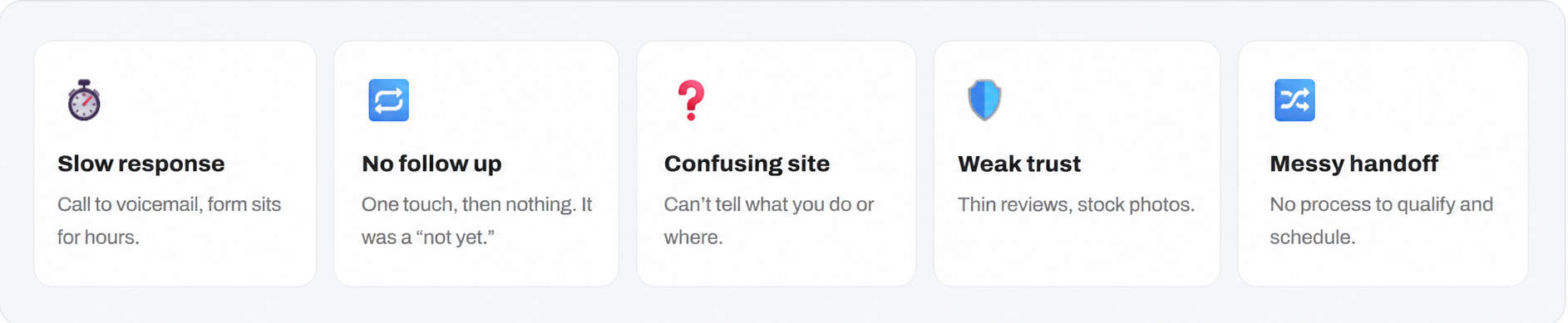
They die on slow response, when the call goes to voicemail, the form sits for hours, and the text gets seen “later.” They die because there is no follow up system, so one attempt goes out and then nothing, even though the lead was not a no. It was a “not yet” that never got a second touch. They die on a website that does not answer the basic question, when a visitor cannot quickly tell what you do, where you work, or what it costs, so they bounce to someone clearer. They die on weak trust signals, when thin reviews and stock photos push the homeowner toward the company that simply feels safer. And they die in a messy handoff, when even an answered call stalls because there is no clear process to qualify, quote, and schedule.
None of these is a marketing spend problem. Every one of them is a process problem, and most of them can now be handled automatically.
Speed to Lead: The First Few Minutes Decide It
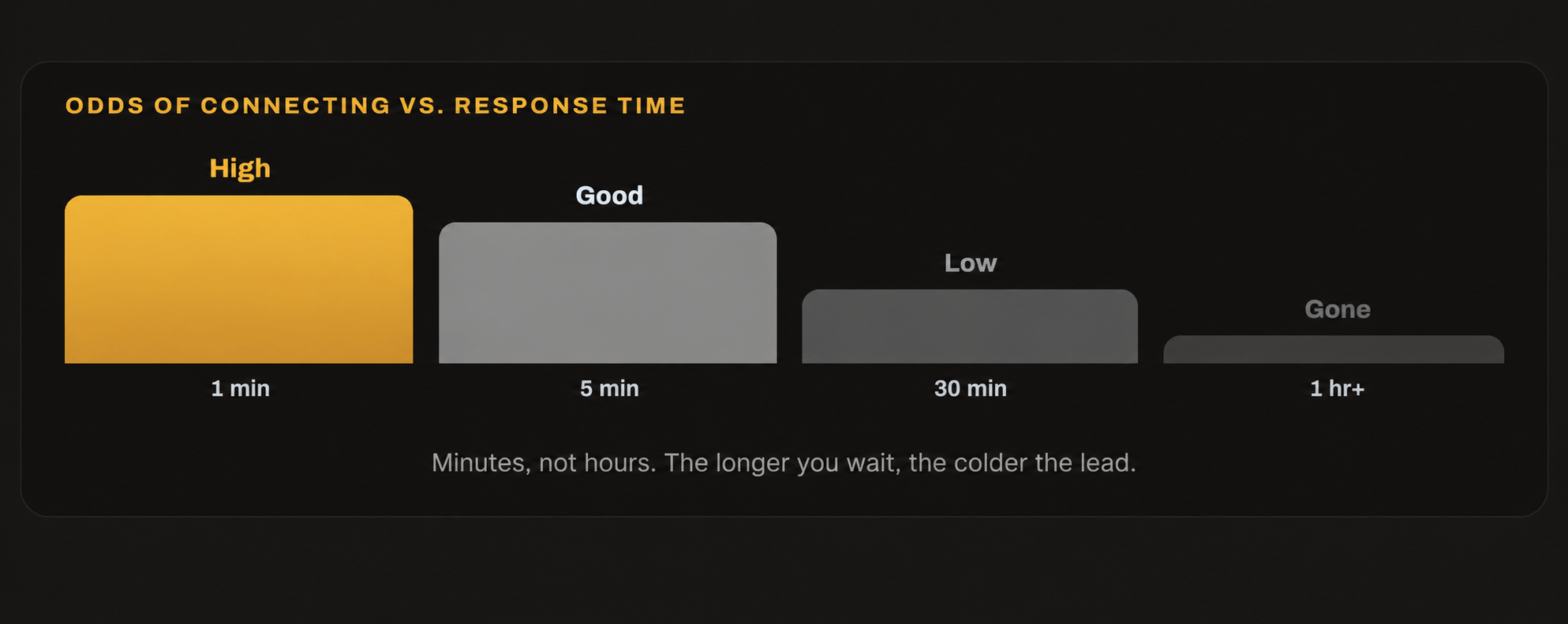
Speed is the quietest killer of all. A homeowner with no heat or a flooded water heater is not leaving three voicemails and waiting patiently. They are calling the next name on the list. The business that responds first usually wins the job, almost regardless of who is “better.”
The research backs this up bluntly. A widely cited study covered by Harvard Business Review on the short life of online sales leads found that most companies respond far too slowly, and that reaching out within a few minutes rather than an hour dramatically increases the odds of ever connecting. For home service, treat minutes as the unit that matters, not hours. If nothing else changes, closing your response time gap alone will book more of the leads you already get. The problem, of course, is that a busy crew cannot answer in minutes every time. That is exactly where an AI system starts to earn its place.
Want to know where your calls are
leaking right now?
Lead Follow Up Is a System, Not a Single Text
Here is where most local service businesses leave money on the table. They send one message, hear nothing back, and mentally file the lead as dead. But no reply to the first text almost never means no. People get busy, get pulled onto a job, put the phone down. The sale is usually in the second, third, and fourth touch, the ones most companies never send.
A real lead follow up system is simple and consistent. Reach out fast, then follow up on a set cadence across more than one channel, a call, a text, an email, until you get a yes, a no, or a clear “not right now.” A practical rhythm is an immediate response, another attempt within the hour, one the next day, and a couple more spread across the following week. This is not about being pushy. It is about being reachable and easy to say yes to. Short, specific, helpful messages such as “Still want us to take a look at that AC unit? We have a 2 to 4pm slot open tomorrow” outperform vague check ins every time. The catch is that running this by hand, perfectly, for every single lead, is almost impossible once you are actually busy.

How an AI System Fixes the Follow Up Gap
This is the part that has genuinely changed in the last couple of years. Everything above used to depend on a person remembering to do it. Now the reliable, repetitive parts can run on their own through an AI powered lead management system, so no lead slips through while you are on a roof or under a house.
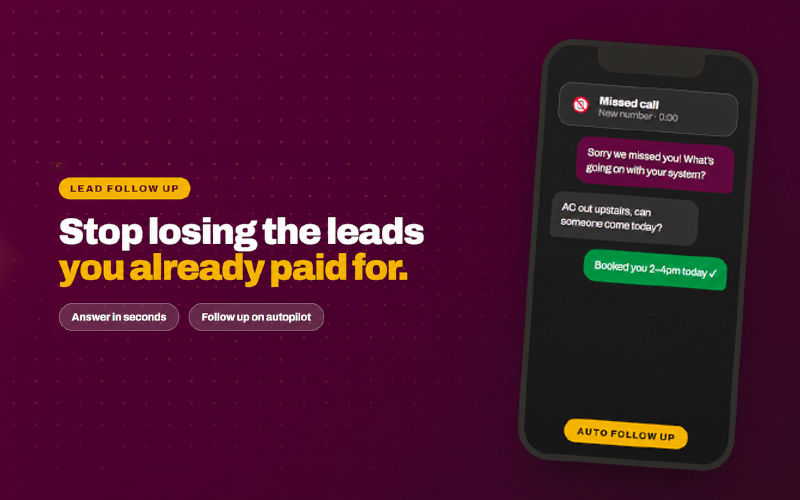
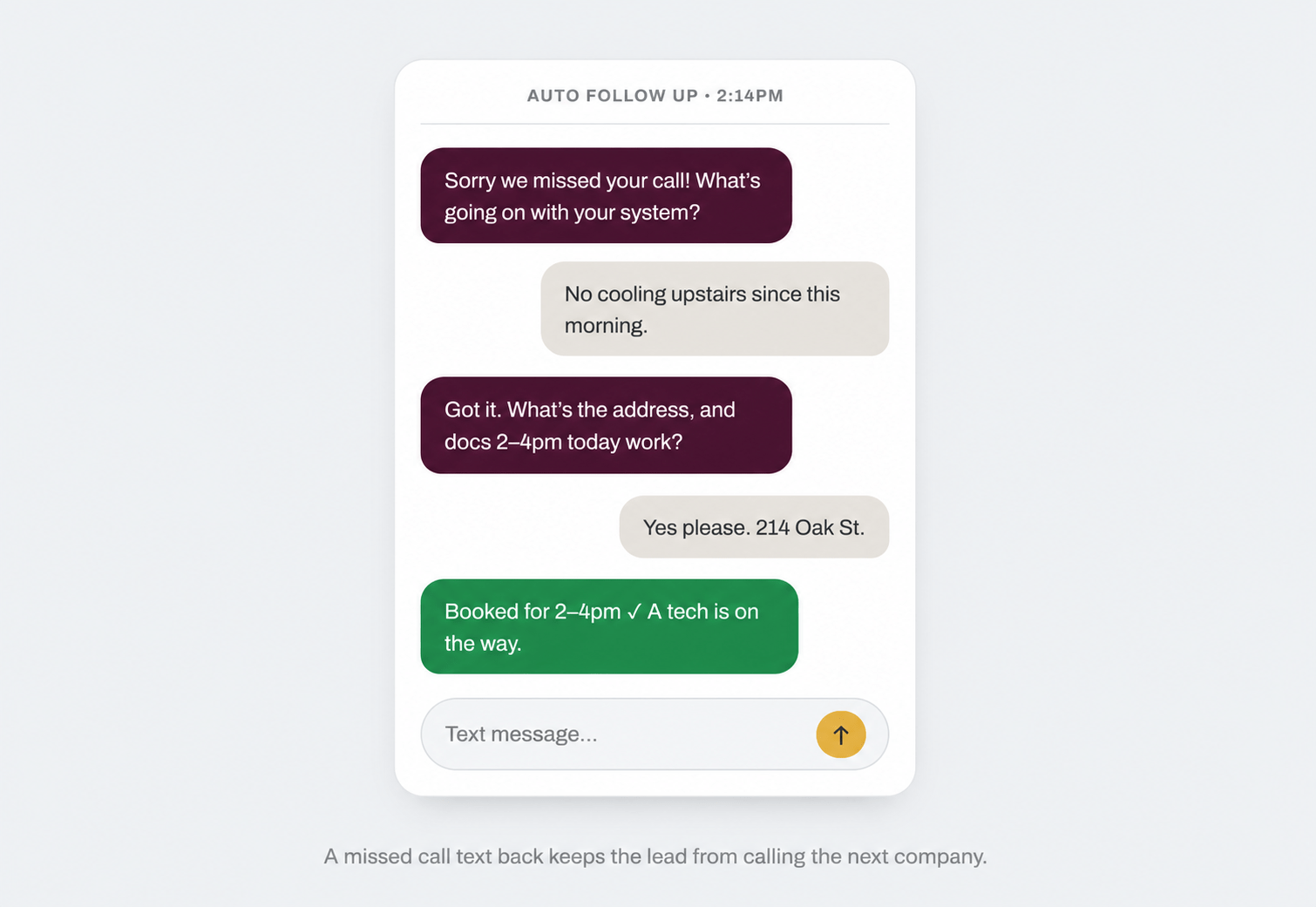
Picture what that looks like in practice. The moment a call is missed, a missed call text back goes out automatically: “Sorry we missed you, what is going on with your system?” A new web form triggers an instant reply within seconds, any hour of the day. An AI assistant can ask the basic qualifying questions, capture the name, address, system type, and urgency, and offer real appointment windows, all before a competitor even picks up. If the customer does not respond, the system keeps the follow up cadence going on its own, nudging politely over the next several days instead of giving up after one try. And every lead, from every source, lands in one place, a simple CRM for contractors, so nothing lives only in a missed call log or a sticky note.
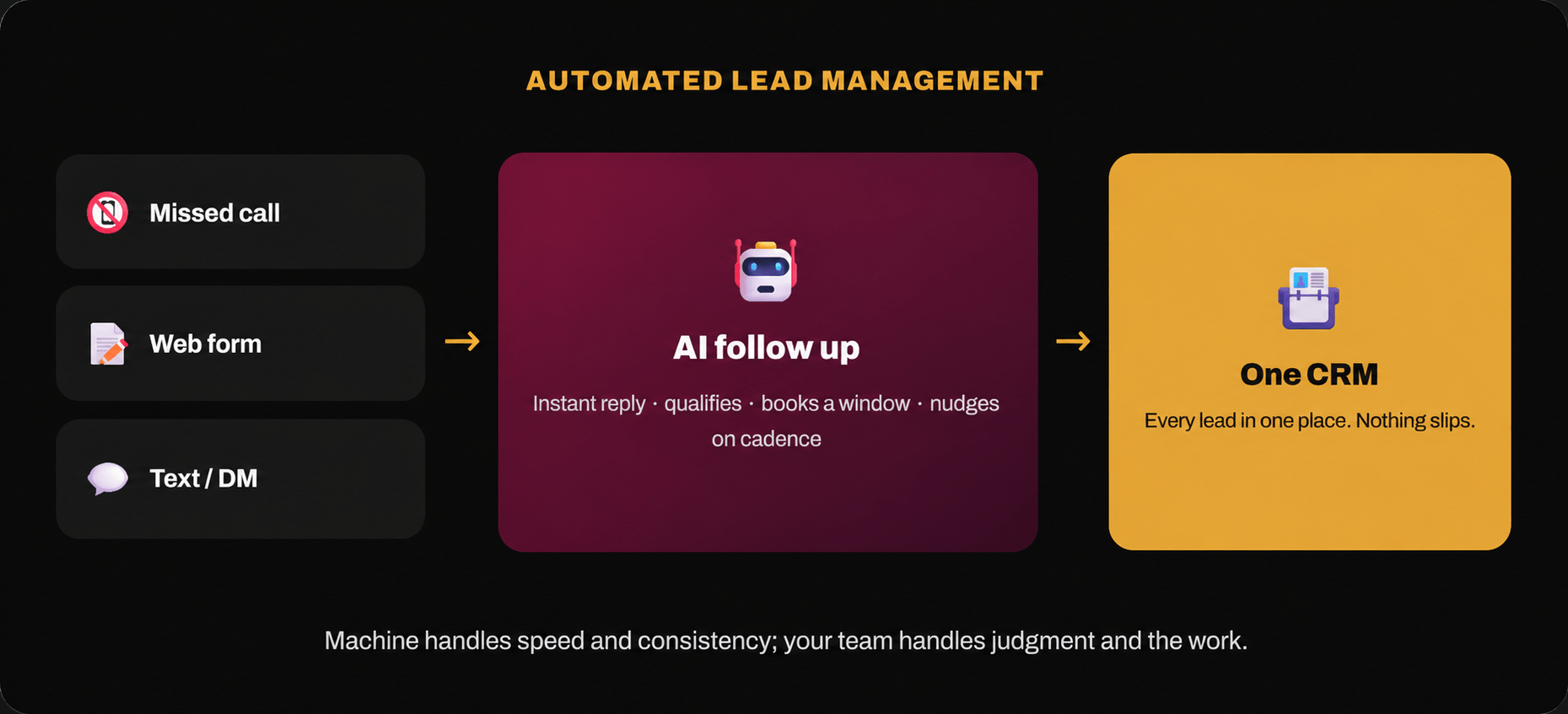
The point of automated lead management is not to remove the human touch from the jobs that need it. It is to make sure the machine handles speed and consistency, which people are bad at when they are busy, while your team handles judgment, quoting, and the actual work, which people are good at. A small crew running a system like this can follow up like a company three times its size, answer every lead in seconds around the clock, and stop bleeding jobs it already paid to generate. This is exactly the kind of AI lead management we build for local service businesses, and it is usually the single highest return change an owner can make.
Close the Trust Gap
Speed and follow up get you the conversation. Trust gets you the booking. When a stranger lands on your listing or website, they are answering one question in a few seconds. Is this company legit, and can they actually help me? If the answer is not obviously yes, they move on.
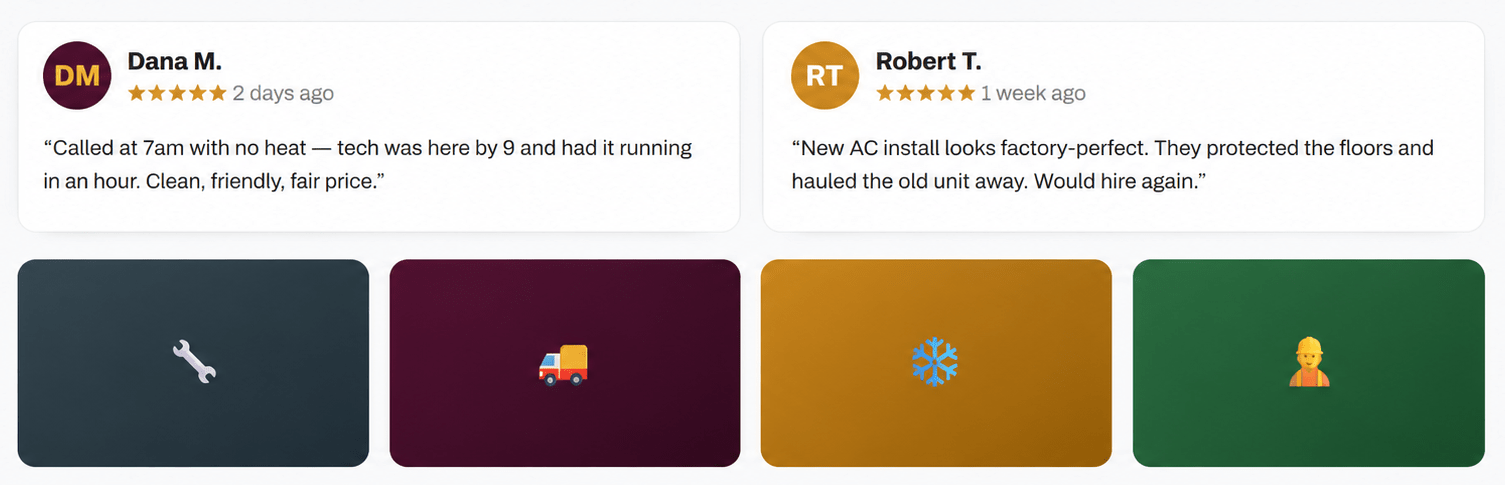
The biggest trust killers are the fixable ones. A thin or stale review count. Stock photos instead of real crews and trucks. Inconsistent or outdated business info. Reviews do the heaviest lifting, and research consistently shows that the vast majority of people read them before choosing a local business, as BrightLocal’s consumer review research documents year after year. Build a habit of asking every happy customer the same day, and here too an AI system helps by sending the review request automatically the moment a job is marked complete. Show real photos of real work, and keep your name, address, phone, and services identical everywhere. Trust is not a vibe. It is a checklist, and most of it can run on autopilot.
Make Your Ads, Website, and Call All Say the Same Thing
A subtle leak is message mismatch. The ad promises “same day emergency repair,” the website opens with a paragraph about company history, and the person answering the phone does not mention emergencies at all. Each step quietly contradicts the last, and momentum dies.
Every touchpoint a lead hits, ad, landing page, phone greeting, and automated text, should reinforce the same promise. If your ad sells speed, your site should lead with speed and your intake should confirm it. This is where good design and clear strategy actually convert. Not by looking pretty, but by removing every reason to hesitate. When the message matches from the first click to the booked appointment, conversion rises without spending a dollar more on traffic.
What the Best Local Service Businesses Do Differently
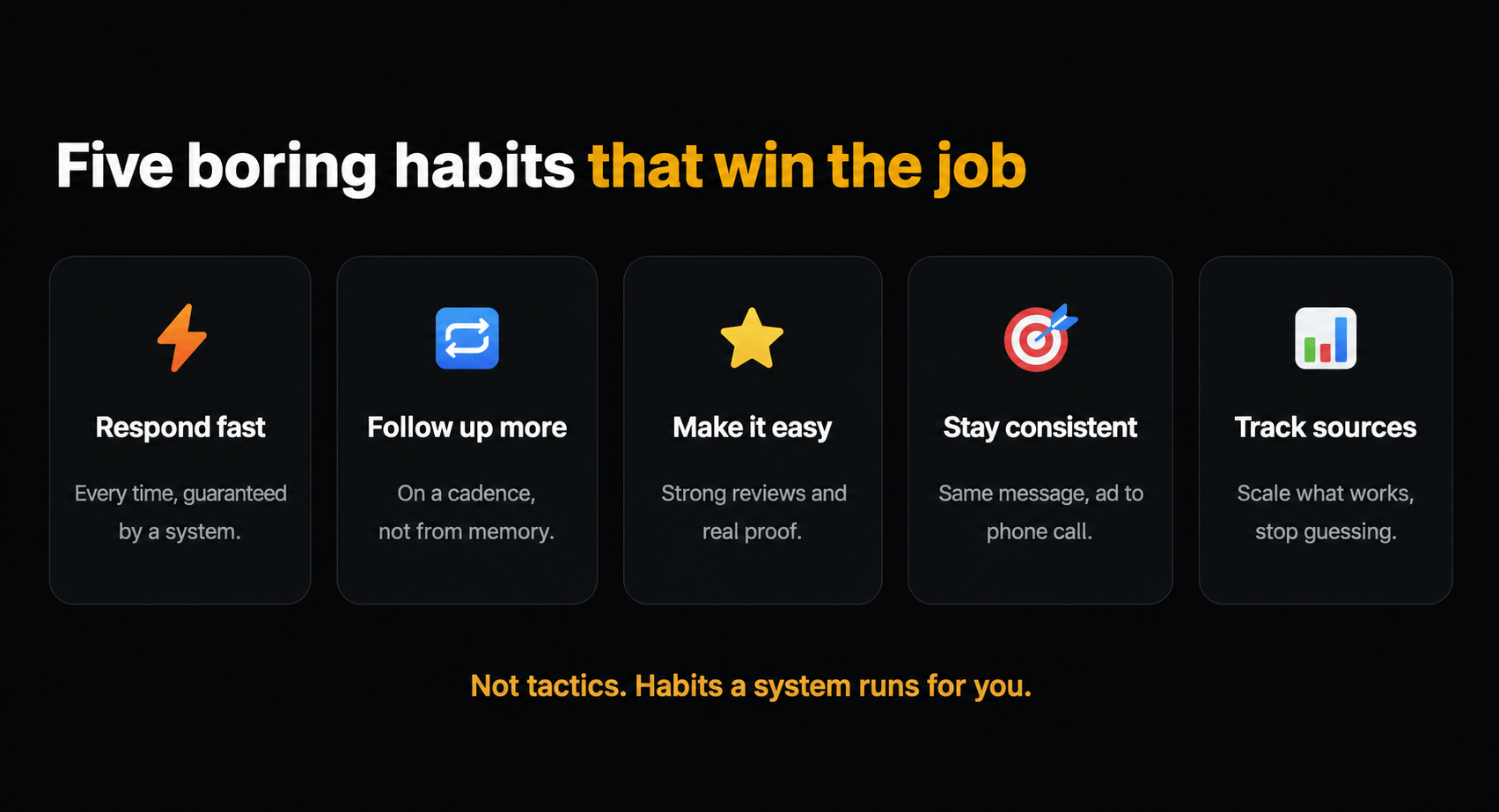
The companies that consistently turn leads into booked jobs are not running secret tactics. They share a few boring habits. They respond fast, every time, usually because a system guarantees it. They follow up more than once, on a cadence that does not depend on anyone’s memory. They make the choice easy with strong reviews and real proof. They keep their message consistent from ad to phone call. And they track where jobs actually come from, so they scale what works instead of guessing.
None of that requires a bigger budget. It requires treating follow up as a system you run on purpose, and letting AI carry the parts that break down the moment your day gets busy.
Frequently Asked Questions
Usually it is not lead quality, it is what happens after the lead comes in. The most common causes are slow response, following up only once, weak trust signals, and a website that does not clearly answer what you do and where. Tighten those, and the leads you already have start booking.
Think in minutes, not hours. Home service customers often hire whoever answers first, and the odds of connecting drop sharply the longer you wait. During business hours aim to respond within five minutes. After hours, use an automatic text so the lead knows they have been heard. An AI system makes an instant response possible even when your crew is busy.
More than once. Most sales happen after the first attempt, yet most businesses stop there. A practical cadence is an instant response, another try within the hour, one the next day, and a couple more across the following week, mixing call, text, and email until you get a clear yes, no, or not now. Automated follow up keeps that cadence running without anyone remembering to send it.
Use an AI powered lead management system that fires a missed call text back on every unanswered call or form, then runs a reminder sequence on its own. It can answer around the clock, ask basic qualifying questions, offer appointment windows, and drop every lead into one CRM, so nothing slips through while you are on a job.
Be fast, consistent, and specific. Short helpful messages that offer a concrete next step beat vague check ins. Automate the reminders so they always go out, and keep a human on quoting and scheduling. Speed and consistency are exactly what an AI system is best at.
Sometimes, but less often than owners assume. “Bad leads” is the explanation that requires changing nothing on your end. Before blaming the source, measure your response time and follow up. Fix those first, and you will usually find the same leads convert far better.
The Bottom Line
You probably do not need more contractor leads. You need to stop losing the ones you already pay for. Respond in minutes, follow up like it is a system, let AI handle the speed and consistency so nothing slips, and make it easy to trust and say yes to you. Do that, and your booking rate climbs without a bigger ad budget.
Want to see exactly where your leads are leaking? That is the purpose of a free audit. We will map your response times, follow up, website, and trust signals, then show you plainly what is costing you jobs, and where an AI lead management system would win those jobs back. No pitch. Just the scoreboard that counts.
Related reading: our guide to HVAC lead generation covers the front half, getting found and getting the call in the first place.
 Funnel Strategy
 Graphic & Web Design
 Paid Local Ad
 Marketing Strategy