

Lawn care is one of the most common ways people start a home service business. The equipment is familiar, demand returns every week of the growing season, and a happy customer can stay with you for years. Because it is so easy to start, though, many lawn care businesses stay small, underpriced and exhausted, mowing scattered yards across town for prices that barely cover fuel.
The difference between a side hustle and a real lawn care company usually comes down to a few decisions: pricing for profit, building dense routes, getting properly licensed for treatments, keeping customers all season and selling more than mowing. Owners who get those right can grow from one truck to several crews.
This guide covers how to start a lawn care business step by step: skills and training, licenses for mowing and for fertilizer and weed control, legal setup, insurance, equipment, startup costs, services, pricing, route planning, branding, your website and Google Business Profile, first customers, reviews, ads, lead response, software, recurring revenue, hiring, common mistakes and your first 90 days.
To start a lawn care business, register the business, get general liability insurance, check whether your state requires a pesticide applicator license for fertilizer and weed control, buy reliable commercial equipment, and price each lawn from your real costs and a target hourly rate.
Then build a simple website and a complete Google Business Profile, win customers in a few tight neighborhoods to keep routes dense, ask every customer for a review, answer leads quickly and sell weekly service agreements plus add-ons like aeration, cleanups and treatments.
Is a Lawn Care Business Worth Starting in 2026?
Yes, when you build recurring weekly customers on dense routes and add higher-margin services.
Lawn care has steady, repeatable demand. Homeowners, rental owners, HOAs and businesses need grass cut every week or two through the growing season, and many would rather pay someone than do it themselves. That gives you recurring revenue that is easier to forecast than one-off jobs.
The challenges are competition, seasonality in colder regions and thin margins on mowing alone. Successful lawn care companies focus on route density, sell treatments, aeration, seeding and cleanups alongside mowing, and in colder climates add snow removal or holiday lighting to cover winter.
Mowing gets you on the property. Treatments, cleanups and loyalty make you profitable.
What Skills and Training Do You Need?
Learn mowing and edging technique, turf basics, equipment maintenance and accurate quoting.
Good lawn care is more than cutting grass. Learn the right mowing height for your local grass types, how often to cut through the season, how to edge and trim cleanly and how to avoid scalping or spreading disease. Basic turf knowledge, such as recognizing common weeds, pests and watering problems, helps you spot upsell opportunities and advise customers.
Equipment maintenance is a skill too. Sharp blades, clean filters and regular servicing keep machines running and cuts looking professional. If you plan to apply fertilizer or weed control, you will need formal training and usually a state license, covered below. Local extension services and equipment dealers are good places to learn.
Do You Need a License to Start a Lawn Care Business?
Usually a general business license for mowing, and often a state pesticide applicator license for fertilizer and weed control.
Most cities and counties require a general business license. Mowing, edging and cleanups usually don’t need a special trade license. Applying pesticides, including many weed-control products, for hire is different. States regulate commercial pesticide application, and many require you to be certified and licensed before treating customers’ lawns. The EPA explains the certification standards for pesticide applicators, and your state agriculture department runs the program.
Some states also license landscape contractors for installation work, irrigation or hardscaping. Check your state and local requirements before offering each service, and use the SBA’s guide to licenses and permits as a starting point.
How Should You Set Up the Business Legally?
Choose a structure, register the name, get an EIN and keep business money separate.
Many lawn care businesses start as a sole proprietorship or LLC. An LLC can help separate business and personal liability. The SBA explains the trade-offs in choosing a business structure, and a local accountant can help you decide.
Register your business name, get a free Employer Identification Number from the IRS and open a separate business bank account. Track fuel, equipment, repairs and mileage from the first day. Those records show which customers and routes are actually profitable.
What Insurance Does a Lawn Care Business Need?
General liability, commercial auto, equipment coverage and workers’ compensation once you hire.
Mowers throw rocks, trimmers crack windows and trailers can damage driveways. General liability covers many of these risks, and HOAs and commercial customers will usually require a certificate of insurance. If you apply treatments, ask your agent about coverage for chemical application.
- →General liability: property damage and injuries to others
- →Commercial auto: your truck and trailer
- →Equipment coverage: mowers and tools if stolen or damaged
- →Workers’ compensation: usually required once you hire
The SBA’s business insurance guide explains the main types. Lock your trailer and equipment every night; theft is a common and costly problem.
What Equipment Do You Need to Start?
A reliable commercial mower, trimmer, edger, blower, trailer and safety gear. Add treatment and cleanup tools later.
Buy commercial-grade equipment if you can. Residential mowers are not built for daily use and will cost you more in breakdowns and lost days. Match mower size to the lawns you serve: narrow gates and small yards need a smaller machine, while larger properties need a wider deck to stay efficient.
- →Mower: commercial walk-behind or stand-on sized to your typical lawns
- →Trimmer and edger: for clean lines on beds, walks and driveways
- →Blower: to clean clippings off hard surfaces
- →Trailer: secure, lockable and sized for growth
- →Spreader and sprayer: only once you are licensed for treatments
- →Safety gear: eye and hearing protection, gloves and boots
- →Spare parts: blades, line, filters and belts
How Do You Work Out Your Startup Costs?
List equipment, vehicle, insurance, licenses, marketing and working cash, then get local prices.
Costs depend on whether you already own a truck, buy new or used equipment and offer treatments from the start. Build your own list and get real quotes from local dealers and insurers.
Used commercial equipment from a reputable dealer can lower startup costs, but have it inspected. The SBA guide to funding your business covers financing options.
Which Services Should You Offer First?
Start with mowing, edging and blowing, then add cleanups, aeration, seeding, mulching and licensed treatments.
Weekly or biweekly mowing is the foundation. It builds a recurring customer base and puts you on each property often enough to spot other needs. Spring and fall cleanups, leaf removal, hedge trimming and mulching are natural add-ons that raise revenue per customer.
Aeration, overseeding and fertilizer and weed control programs often carry better margins than mowing, but treatments require licensing in most states. Snow removal or holiday lighting can fill winter in colder climates. Add services one at a time, learn to do them well and price them properly before adding the next.
How Should You Price Lawn Care?
Price from your true hourly cost plus profit, adjust for lawn size and difficulty, and set a minimum per visit.
Start by calculating your real hourly cost, including equipment, fuel, insurance, maintenance, drive time and your own pay. Add profit to get a target hourly rate. Then estimate how long each lawn will take, including trimming, edging, blowing and travel, and price per visit from there.
Set a minimum visit price so small yards still pay for the stop. Charge more for overgrown lawns, steep slopes, lots of obstacles or bagging. Offer seasonal or monthly billing for weekly customers, which smooths cash flow for both of you. Our guide on pricing home services walks through the method.
Price the lawn and the drive. A cheap lawn across town loses money.
How Do You Build Efficient Routes?
Win customers in a few neighborhoods, group them by day and turn down lawns that break your routes.
Drive time is unpaid time. Ten lawns on the same few streets can earn far more than ten lawns spread across the city. Pick a handful of target neighborhoods, market heavily there and schedule each area on the same day each week.
Use door hangers and yard signs on the streets around every customer, and offer a small neighbor discount when two houses on the same street sign up. Be willing to say no, or charge more, for lawns well outside your routes. Route density is one of the biggest drivers of profit in lawn care.
How Do You Choose a Name and Brand?
Choose a clear name that includes lawn care, check availability and use it consistently on trucks, trailers and uniforms.
Your truck and trailer are rolling billboards in the same neighborhoods every week, so a name and logo that are easy to read at a glance pay off. Include “lawn” or “lawn care” in the name if possible, check that the domain and social handles are free and avoid names close to local competitors.
Use the same name, phone number and service area everywhere: website, Google Business Profile, invoices and directories. Matching shirts and a clean trailer make a small company look established and trustworthy.
Do You Need a Website?
Yes. A fast, simple site with services, service areas, photos, reviews and an easy quote request.
Even customers who find you through a neighbor will look you up. A website that shows clear services, the neighborhoods you serve, real photos and reviews makes it easy to choose you. Let customers request a quote by entering their address, and call or text them back fast.
Create a page for each main service and each key service area. Our home service website guide explains what each page should include, and our landscaping SEO guide covers how to rank those pages locally.
How Do You Set Up Your Google Business Profile?
Create and verify it, choose the right categories and service areas, add services and photos and keep it active.
Your Google Business Profile decides whether you show up when someone searches “lawn care near me.” Set it up as a service-area business, choose the most accurate primary category, list your services and add the neighborhoods you serve. Follow Google’s business representation guidelines to avoid suspension.
Upload real photos every week, post seasonal offers like spring cleanups and aeration, and reply to every review. Our Google Business Profile checklist covers every setting.
How Do You Get Your First Customers?
Start with neighbors, friends and visible marketing in a few target neighborhoods.
Your first customers usually come from people near you or people who see your work. Tell everyone you know, mow a few lawns in your target neighborhoods at an introductory price in exchange for reviews, and hang door hangers on every street where you work.
- →Door hangers: on the streets around each customer
- →Local groups: neighborhood Facebook groups and Nextdoor
- →Partners: realtors, property managers, pool and pest companies
- →Seasonal pushes: spring cleanup and aeration offers before the season starts
Start marketing before spring. Many homeowners lock in their lawn care for the season early, and the companies that reach them first win the year.
How Do You Get Reviews Early?
Ask every new customer after the first few visits, make it easy and reply to every review.
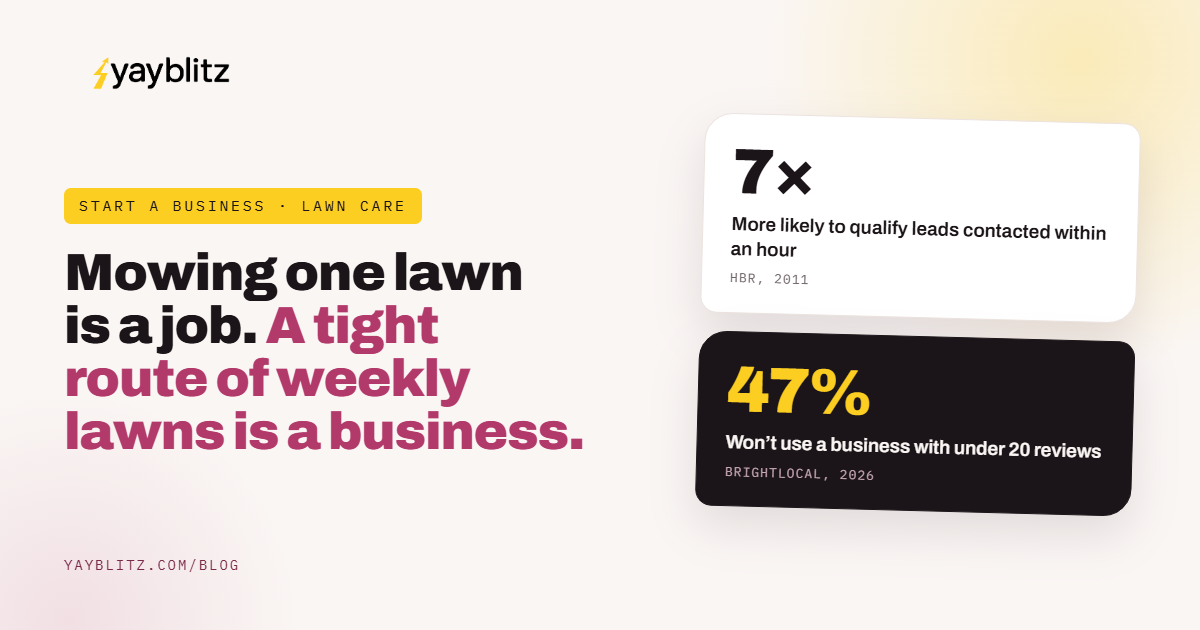
Reviews strongly influence who gets the call. In BrightLocal’s 2026 research, 74% of consumers said they only care about reviews from the last three months, so you need a steady flow, not a one-time push.
Send a review link after the first few visits once the customer sees consistent results, and again after big jobs like cleanups. Mention the service and neighborhood in your request so reviews include those details. See our guide on how to get more Google reviews.
Should You Use Paid Ads When You Start?
Wait until your profile, website and reviews are ready, then start small in your best neighborhoods.
Ads can fill routes faster, but only if the basics are in place. Start with tightly targeted Search ads or Local Services Ads in your target neighborhoods, with negative keywords to block searches for mower repair, lawn equipment and jobs.
Time ads to the season. Spring is when most homeowners choose a lawn care company, so start before the rush. Our guide on Google Ads for landscapers covers campaign setup.
How Fast Should You Answer Leads?
Within minutes, even if it’s a quick text saying when you’ll call.
Homeowners often request quotes from several companies. A Harvard Business Review study found businesses that responded within an hour were about seven times more likely to qualify a lead. On a mower, that is hard, so automate it.
Set up an instant text reply for missed calls and form submissions, and use satellite measuring tools to send a price quickly without a site visit. Our speed-to-lead guide explains simple systems.
What Software Do You Need?
Lawn care or field service software for quotes, routing, scheduling, invoicing, autopay and reminders.
Once you have more than a handful of customers, paper and spreadsheets break. Field service software helps you build routes, schedule recurring visits, invoice automatically, take card payments and send review requests and reminders.
Look for recurring scheduling, route optimization, autopay and simple reports showing revenue per hour and per route. Our guide to landscaping CRM explains which features matter.
How Do You Keep Customers All Season?
Show up on the same day, communicate, keep quality consistent and offer seasonal agreements.
Lawn care customers leave when crews skip visits, show up randomly or do sloppy work. Consistency is your best retention tool. Mow on the same day each week, text when weather delays you and keep edges and cleanup sharp.
Offer seasonal or annual agreements that bundle mowing with cleanups, aeration and treatments. Agreements make revenue predictable and make customers less likely to switch. Our guide to service agreements for contractors explains how to structure them.
When Should You Hire Your First Employee?
When your routes are full and you’re turning away work, or quoting and admin are eating your evenings.
Hire when you have enough steady weekly work to keep a second person busy. Start with a reliable helper, train them on equipment safety and quality standards and check your workers’ compensation obligations.
Over time, a crew lead who can run a route lets you focus on sales, quoting and growth. Write down your standards, such as mowing patterns, trimming and cleanup, so quality stays consistent when you’re not there.
What Mistakes Do New Lawn Care Businesses Make?
Underpricing, scattered routes, unlicensed treatments, poor equipment and no follow-up.
- →Underpricing: prices that don’t cover fuel, equipment and your time
- →Scattered routes: too much drive time between lawns
- →Unlicensed treatments: applying products without the required license
- →Cheap equipment: residential machines that break mid-season
- →Inconsistent schedules: the fastest way to lose customers
- →No reviews: invisible on Google Maps
- →Mowing only: missing higher-margin services
What Does Your First 90 Days Look Like?
Set up first, fill routes in a few neighborhoods next, then add systems and services.
Start this plan before the season if you can. By day 90 you should know your revenue per hour, your most profitable neighborhoods and which add-ons customers want most.
The 16-point lawn care startup checklist
Tick what you already have. The first unticked items are your next moves.
Setup
4 itemsOperations
4 itemsMarketing
4 itemsGrowth
4 itemsFrequently Asked Questions
How much does it cost to start a lawn care business?+
Do you need a license to start a lawn care business?+
How should I price lawn mowing?+
How do lawn care businesses get customers?+
Is lawn care a profitable business?+
What equipment do I need to start a lawn care business?+
How do I keep lawn care customers?+
What can a lawn care business do in winter?+
Build Routes, Not Just a List of Lawns
Price for profit, keep routes dense, get licensed for treatments, show up consistently and turn mowing customers into full-season agreements. That is how lawn care companies grow from one trailer to many.
Every lawn on your route should make the next one easier to win.
Yay Blitz helps lawn care companies connect Graphic and Web Design, Paid Local Advertising, and AI Lead Management into one measurable system for getting and converting leads.
Want a second opinion? Book a Free Strategy Assessment. We’ll review your website, Google profile and lead follow-up and show you how to fill your routes.
 Funnel Strategy
 Graphic & Web Design
 Paid Local Ad
 Social Media Marketing