

A blinds or shutters consultation can go well and still end without a sale. The homeowner liked the consultant, understood the options, and received a proposal. Then the conversation stops.
Calls go to voicemail. The proposal is opened but not signed. A week later, the homeowner says they went with someone else, or they simply never reply.
Most of those projects were not lost in the consultation. They were lost in the follow up.
For window treatment businesses, quote follow up is one of the least managed parts of the sales process. It is often left to individual consultants, handled inconsistently, and rarely measured. Yet it sits between work the business has already paid for and revenue it has not yet collected.
This guide explains how owners can build a quote follow up process that is timely, useful, respectful of the homeowner, and measurable, without leaning on pressure or automatic discounts.
Open Quotes Are Unsold Revenue Sitting in the CRM
Most window treatment owners track leads and booked consultations closely. Far fewer track what happens to proposals after they are sent. That is a costly blind spot, because an open quote represents a homeowner who already invited the company into their home, discussed the project, and received a price.
The marketing cost to create that opportunity has already been spent. The consultant's time has already been spent. Whether the project sells now depends heavily on what happens in the days and weeks after the visit.
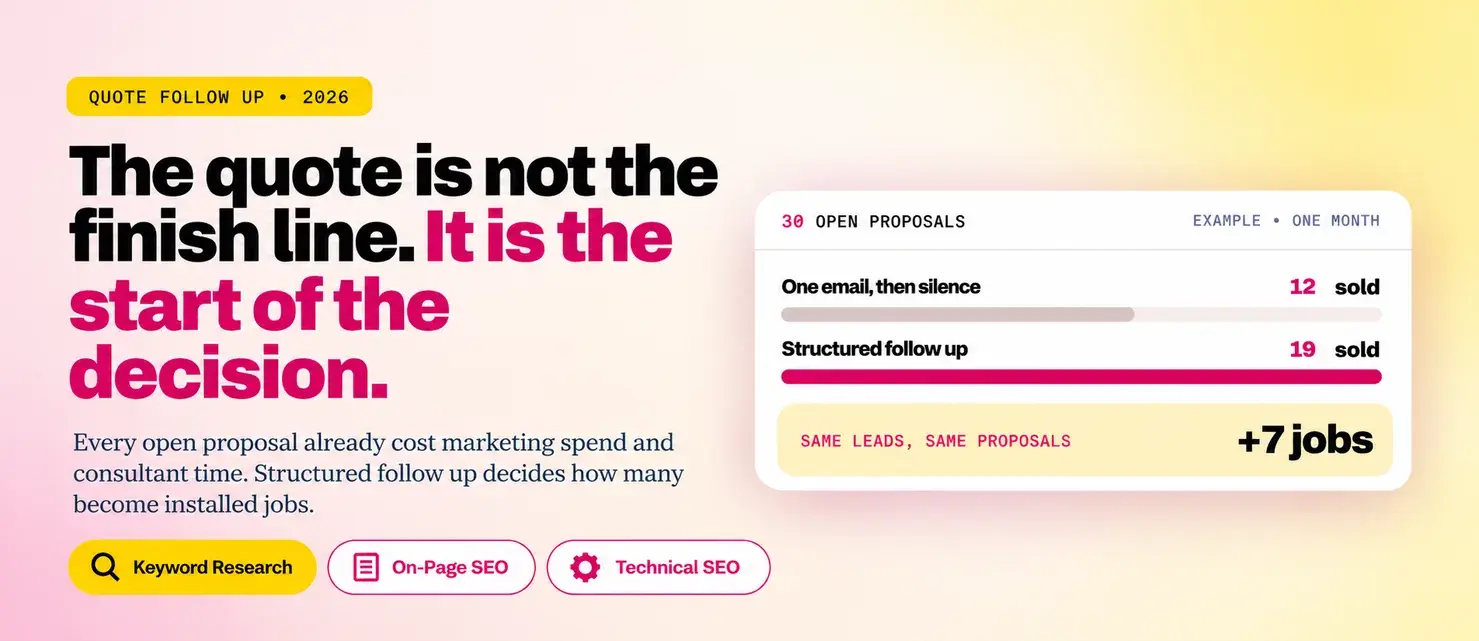
Imagine a company sends thirty proposals in a month with an average value of $4,800. That is $144,000 in open opportunity. If follow up is inconsistent, a meaningful share of that pipeline may quietly expire, not because homeowners chose a competitor, but because nobody gave them a clear reason or an easy way to move forward.
This article builds on Window Treatment Consultation Conversion . The consultation creates the opportunity. Quote follow up protects it.
Why Homeowners Go Quiet After a Good Consultation
Silence after a proposal rarely means a firm no. It usually means the decision stalled somewhere. Common reasons include:
Each of those needs a different response.
A generic “just checking in” message treats them all the same. Effective follow up starts by understanding which situation the homeowner is actually in. That is far easier when the consultant captured it before leaving the home.
Follow Up Starts Before the Consultant Leaves
The strongest follow up is planned during the consultation, not invented afterward. Before leaving, the consultant should confirm what happens next and when.
When the homeowner has already agreed to a specific follow up conversation, the next contact feels expected rather than intrusive. That single habit can change the tone of the entire follow up process.
Send the Proposal While Momentum Is Fresh
The homeowner is most engaged immediately after the visit. The room, samples, and recommendation are still clear in their mind. Every day between the consultation and the proposal weakens that clarity.
The proposal itself should be easy to understand. Group line items by room, name products in plain language, show options side by side where relevant, and state what installation includes. A homeowner should not need to decode internal product codes to remember what they discussed.
Not Every Open Quote Deserves the Same Cadence
Treating every proposal identically wastes effort on some opportunities and under serves others. Segment open quotes by value, stage, and timing.
A $15,000 whole house shutter proposal should not sit in the same automated email queue as a two window shade quote. Owners should decide in advance which opportunities get personal attention and which can follow a lighter structured sequence.
A Practical Follow Up Sequence
The exact cadence should fit your market and customers, but a structured sequence is far better than improvising. Here is one reasonable starting point for a standard proposal:
High value proposals may warrant more personal contact. Very small quotes may need less. The point is consistency. A sequence that everyone follows produces better results and better data than a dozen individual habits.
Every Message Should Give the Homeowner a Reason to Respond
Follow up fails when it only asks for a decision. Each contact should add something useful or make the next step easier.
Useful follow up references the actual consultation. It proves the company remembers the home and the homeowner's priorities. That builds trust, and trust is often what the homeowner is still deciding on.
Use the Channel the Homeowner Actually Responds To
Some homeowners answer the phone. Others ignore unknown calls but reply to texts within minutes. Others prefer email so they can forward the proposal to a partner.
Ask during the consultation how the homeowner prefers to be contacted, then respect it. Always follow applicable consent and messaging rules for texts and calls, and make it easy for customers to opt out.
Make It Easy for the Second Decision Maker
Many window treatment decisions involve two people. If one was not present, the proposal often waits until that person catches up, and the consultant's explanation is lost in translation.
Help the homeowner share the decision. Send a clear recap that someone who missed the visit can understand: which rooms, which products, why they were recommended, what the options cost, and what happens next. Include photos of the windows and samples where useful. Offer a short call or evening review with both decision makers.
The easier the decision is to share, the less likely it is to stall.
Handle Price Hesitation Without Reflex Discounts
When a homeowner goes quiet after a proposal, many teams assume price is the problem and immediately offer a discount. That rarely fixes the real problem, and it always costs margin.
Ask first. A simple question such as “Which part of the proposal are you still unsure about?” can reveal whether the issue is price, scope, product choice, trust, or timing. If price is genuinely the obstacle, consider options that preserve value:
If discounts are part of the strategy, use them deliberately and consistently rather than as an automatic reaction to silence. Otherwise the business trains customers to wait for a lower price.
Pause Delayed Projects Instead of Marking Them Dead
Some homeowners genuinely want to buy, just not now. A renovation is unfinished. A move is pending. Budget is planned for next quarter.
If the
A delayed quote with a date is a future sale. A delayed quote without one is usually lost.
Automation Should Support the Consultant, Not Replace Them
Automation is useful for the repeatable parts of follow up: sending the proposal, confirming delivery, reminding the consultant when a call is due, and triggering nurture messages for delayed projects. AI Lead Management for Contractors can handle acknowledgment, reminders, and routing so opportunities do not fall through the cracks.
But automation should not pretend to be a relationship. A homeowner deciding on a $12,000 shutter project wants a knowledgeable person, not a generic drip campaign. Use automation to make sure the human conversation happens on time. The broader principles of contractor lead follow up apply here too: speed, persistence, and relevance.
Measure Quote Follow Up Like a Sales Process
Owners should be able to see how open proposals move over time. Track:
In this illustrative example of thirty proposals, seven sold after two weeks. Without structured follow up, many of those later sales may never have happened. When closed jobs are recorded back in the CRM, marketing can also learn which campaigns produce proposals that actually close, which matters for Window Treatment PPC and Local SEO vs Paid Ads decisions.
What to Review First
Start with the last sixty days of proposals. For each one, ask:
Most owners find the gaps quickly. Proposals sent late. Follow up that stopped after one email. Delayed projects marked lost. No recorded reason for losses. Each of those is fixable without generating a single new lead.
Twenty four questions for your open proposals
Use this checklist against the last sixty days of quotes.
Proposal delivery
6 itemsNext steps
6 itemsFollow up quality
6 itemsTracking
6 itemsIf many of those answers are no, the next sale may already be sitting in your CRM. It just has not been followed up.
Frequently Asked Questions From Blinds and Shutters Owners
How many times should we follow up on a window treatment quote?+
How soon should we send the proposal after the consultation?+
Should we use text messages for quote follow up?+
When should we mark a quote as lost?+
Should we offer a discount when a homeowner goes quiet?+
Can quote follow up be automated?+
Follow Up Is Where Good Consultations Get Paid
A strong consultation creates the opportunity. Disciplined follow up turns it into an installed job.
The best follow up feels like service, not pressure.
It arrives on time, references the homeowner's actual home and priorities, makes the decision easier to share, and respects the homeowner's timeline. Behind it, the business tracks every proposal, knows why quotes are lost, and keeps delayed projects alive with a date instead of forgetting them.
For owners, the opportunity is simple. Before spending more on blinds leads, make sure the proposals you already have are getting the attention they deserve.
Yay Blitz helps blinds, shutters, and other local service businesses connect Paid Local Advertising , Graphic and Web Design , lead tracking, and
If proposals are going out but too many never come back, start with a Free Strategy Assessment . We will review where open quotes are stalling before you spend more creating new demand.
 Funnel Strategy
 Graphic & Web Design
 Paid Local Ad
 Marketing Strategy